
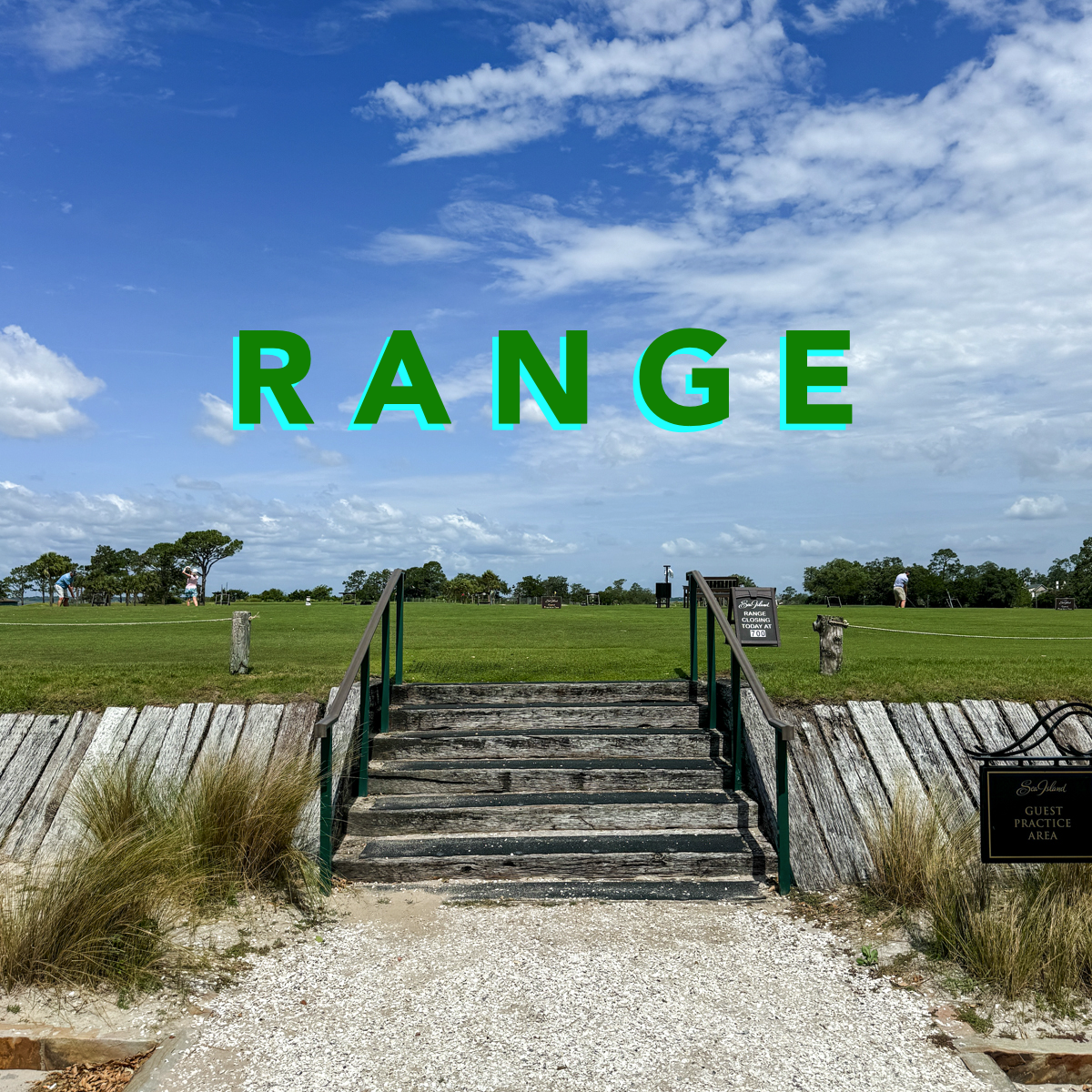
The driving range is one of the most misunderstood places in golf. For some, it’s therapy. For others, it’s a pre-round obligation. A place to loosen up, slap a few wedges, hit a driver or two, and call it preparation. But if you actually want to improve (not just feel busy), the range has to become something more intentional. It has to be practice, not performance. In my effort to improve, I’ve spent a lot of time focusing on range sessions, and getting the most out of my calorie burns.
The first mistake most golfers make is showing up without a plan. They grab a bucket, dump it out, and start firing at whatever flag happens to be in front of them. That isn’t practice. That’s exercise. Going to the range without a purpose is like going to the gym and wandering between machines. You burn calories, but you don’t build strength. Before I ever pull a club, I decide what the session is about. Is it contact? Is it the start line? Is it dialing in yardages? Is it driver control? One theme. Maybe two. That’s it. If you try to fix everything, you fix nothing.
I like to structure a range session the way I’d structure a round. After taking a few minutes to get good and stretched out, I start with wedges. Not because they’re glamorous, but because they matter. A handful of half swings to get the body moving, focusing on tempo and balance. Then, three-quarter wedges, picking a specific target, and committing to it. Not “that general area.” A specific flag, or even better, a yardage marker on the ground. The goal early on isn’t distance, it’s clean contact and start line. If the first 10 balls are struck crisply and start where I’m looking, I know I’m on the right track.
One of the simplest tools that separates thoughtful practice from random ball-beating is an alignment stick. They cost almost nothing, and yet a lot of players don’t use them. I always keep at least one in the bag. Ideally two. One goes down parallel to my target line to check stance alignment. The other can be used perpendicular to monitor the ball position. It’s remarkable how quickly alignment drifts without you realizing it. You think you’re aimed at the flag. You’re not. You’re ten yards right, compensating with your swing. Alignment sticks remove the guesswork. They make practice honest. It’s an area I’ve struggled with, and these sticks are a chat code.
After wedges, I move through the bag intentionally. I don’t hit 20 balls with a 7-iron in a row unless there’s a specific reason. Instead, I’ll hit one 7-iron, then maybe a 5-iron, then back to a wedge. I want to simulate the variability of the course. Golf isn’t played in blocks. It’s played in single shots. Practicing that rhythm …stepping back, picking a new target, going through a routine… builds mental sharpness as much as mechanical skill.
The driver is where range sessions can go off the rails. It’s the most ego-driven club in the bag. You stripe one 280 down the middle of the range, and suddenly you’re chasing that feeling for the next ten swings. Instead, I like to define fairways on the range. Pick two markers and imagine a corridor between them. Your job isn’t distance. It’s to land the ball inside that corridor. If you can’t do that on the range, you won’t do it on the course. Precision beats power every time.
But here’s the truth most players don’t want to hear: the range is only part of practice. The real separator is putting.
You can hit 50 beautiful iron shots and still shoot 85 if you can’t roll the ball. Putting is less exciting, less Instagram-friendly, and infinitely more important. I try to spend at least as much time on the putting green as I do on the range. And again, I go in with a plan.
First, short putts. Three to six feet. These are confidence builders and round savers. I’ll set up a circle around a hole (three to four balls spaced equally) and work around the clock. The goal isn’t just to make them; it’s to rehearse the same routine every time. Read. Commit. Roll. No second-guessing. When those feel automatic, everything else on the course sort of loosens up.
Then lag putting. Thirty to forty feet. The objective here isn’t to hole anything; it’s speed control. I’ll pick a fringe or a tee and try to stop the ball within a putter-length. Great lag putting eliminates three-putts, and eliminating three-putts is one of the fastest ways to lower scores. It’s not sexy. It’s effective.
The final piece of meaningful practice is reflection. After a range or putting session, I’ll take a minute to think about what actually improved. What felt different? What didn’t? If you’re not evaluating your practice, you’re just collecting reps. Improvement comes from awareness. Recently, it’s been my mid-irons. For some reason, I’m turning them a little more right-to-left than I’d like, and I’m trying to work that out.
There’s also something to be said for pace. I see too many golfers racing through a large bucket as if the balls are going to expire. Slow down. Step back between shots. Go through your routine. Visualize. The range should feel deliberate, not frantic. Quality beats quantity every time.
And finally, remember that practice is a privilege. Time at the range is time invested in something you care about. It’s quiet. It’s structured. It’s a chance to focus on one task in a world that rarely allows that. Approach it with intention. And a big Nalgene filled with ice water. Stay hydrated.
Go in with a plan. Use the right tools. Demand honest feedback from yourself. And never neglect the putter. If you do those things consistently, the range stops being a place to kill time and becomes a place where your game actually moves forward.
What do you do at the driving range? I’m always looking to improve…

