
For nearly 250 years, the American flag has stood as a symbol of unity, resilience, and hard-earned freedom. It’s more than fabric. It’s the standard we rally around. The “shining city on a hill” made visible.
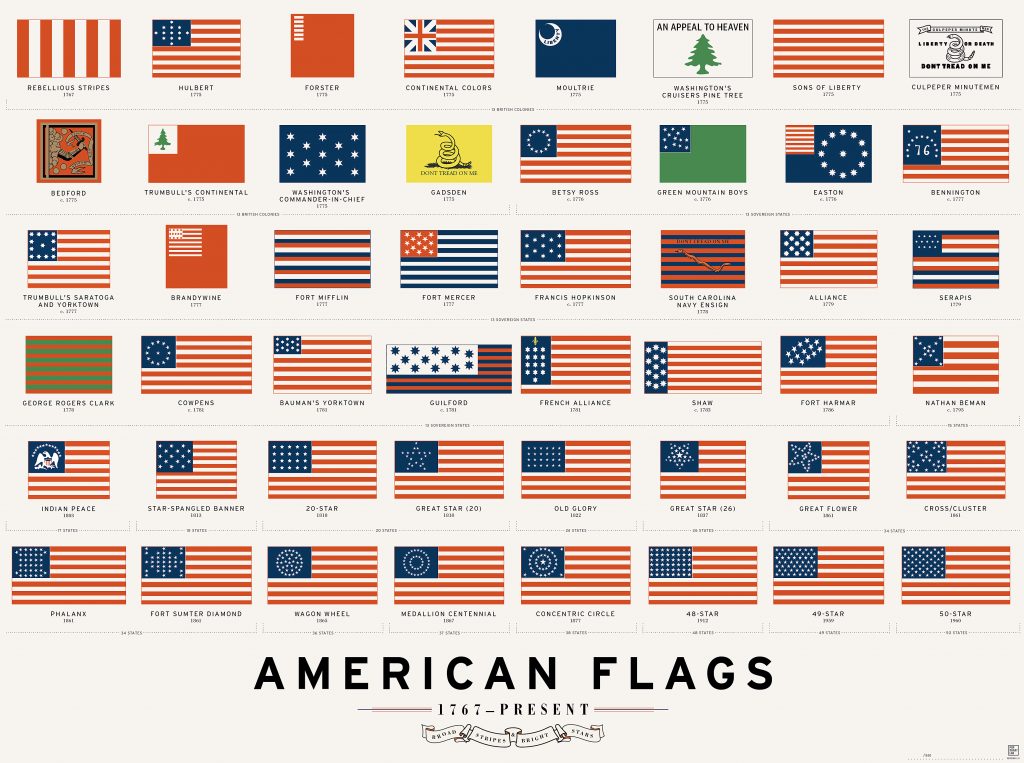
Its story starts, like most good American stories, in the middle of a fight: January 1, 1776 in Boston. The Continental Army is pinned down, outmanned, and staring down the British. George Washington takes command and raises the Grand Union flag over Prospect Hill: thirteen stripes, and yes, the Union Jack still tucked in the corner.
Later that year, Betsy Ross is said to have sewn the first true American flag. By June of 1777, the Continental Congress made it official: “Resolved, That the flag of the United States be made of thirteen stripes, alternate red and white; that the union be thirteen stars, white in a blue field, representing a new Constellation.”
From there, the flag grew with the country: stars added one by one as we pushed west, built towns, fought wars, and figured ourselves out along the way. Twenty-six changes later, we landed on the flag we know today: thirteen stripes for the original colonies, fifty stars for the states that followed.
And the colors mean something:
Red for hardiness and valor.
White for purity and innocence.
Blue for vigilance, perseverance, and justice.
That’s not decoration. That’s a standard.
There’s a right way to handle it, too. Simple things, but they matter:
- Don’t let it touch the ground
- Light it if it flies at night
- Retire it when it’s worn out
- Don’t use it as something disposable
- And if it’s on your truck or boat, the stars face forward—like it’s moving with you, not trailing behind
And don’t forget: Stand for the anthem. Take your hat off. Hand over heart. Teach your kids why it matters. And when you see a veteran, shake his hand and mean it.
Because it’s ALL Americans’ duty to carry forward.

