
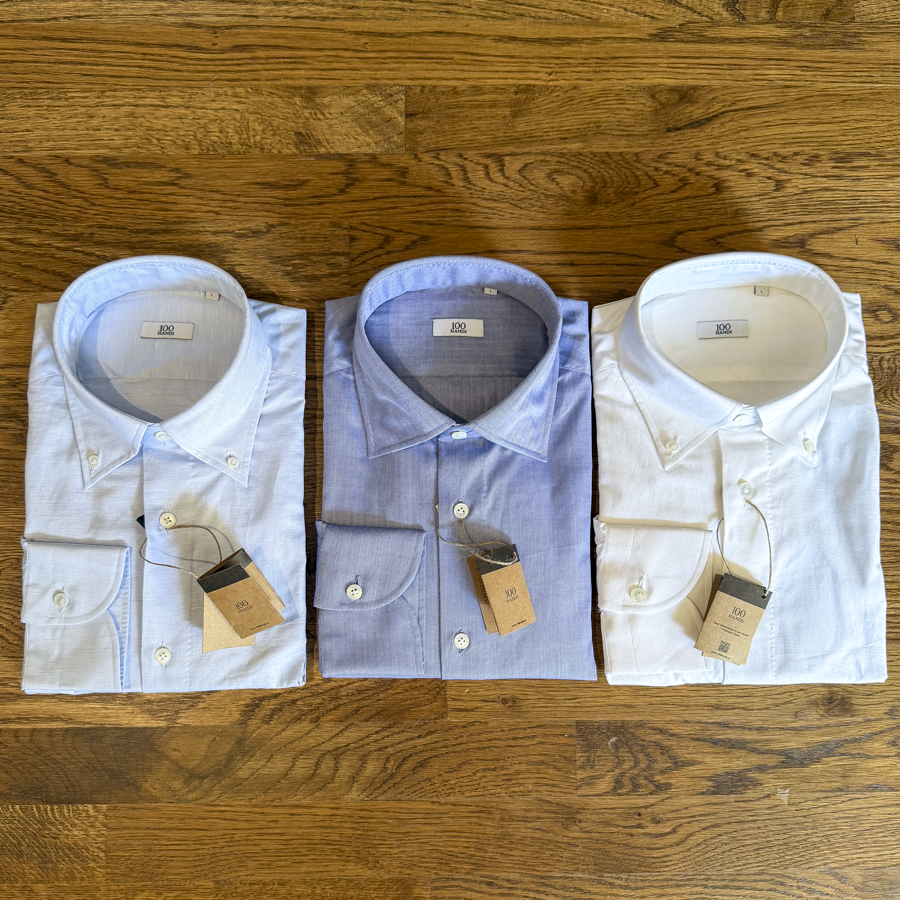
There comes a point in every man’s wardrobe where the focus shifts from owning more clothes to owning better clothes. The closet full of “pretty good” shirts starts to feel exactly that: pretty good. You realize you’re reaching for the same handful of favorites while the rest sit untouched on their hangers. Eventually, you stop asking yourself how many shirts you need and start asking what actually makes a great one.
For me, one of those answers is 100 Hands. I was turned onto these by Bill at Louie, and I’m so glad he did.
If you’re unfamiliar with the brand, that’s understandable. They aren’t chasing Instagram algorithms or paying celebrities to wear their products. They aren’t trying to become the next lifestyle brand. They’re focused on making exceptional shirts, and they’ve quietly earned a reputation as one of the finest shirtmakers in the world.
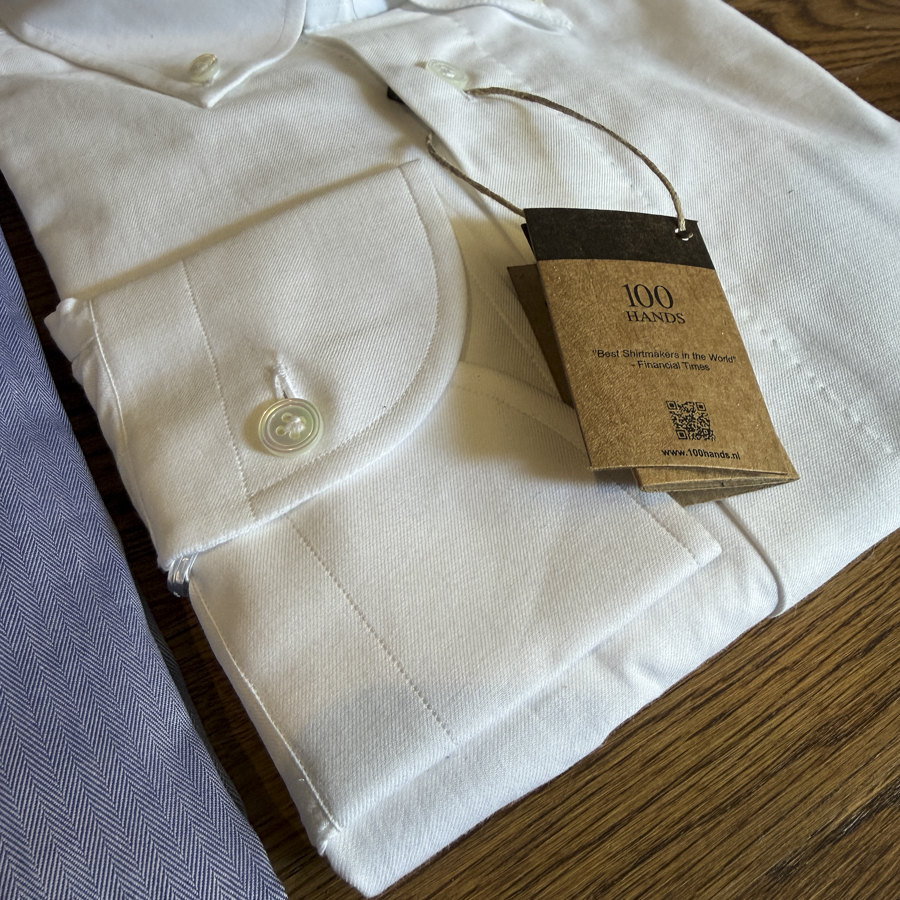
The name itself tells you everything you need to know. “100 Hands” refers to the extraordinary amount of handwork that goes into every shirt. Depending on the collection, dozens of construction steps are completed entirely by hand. Collars are attached by hand. Sleeves are set by hand. Buttonholes are sewn by hand. Even many of the finishing details that you’ll never consciously notice receive the same level of attention. It’s an approach that feels almost old-fashioned today, but that’s precisely what makes the brand so special.
The first thing you’ll notice isn’t any of that craftsmanship, though. It’s the way the shirt feels.
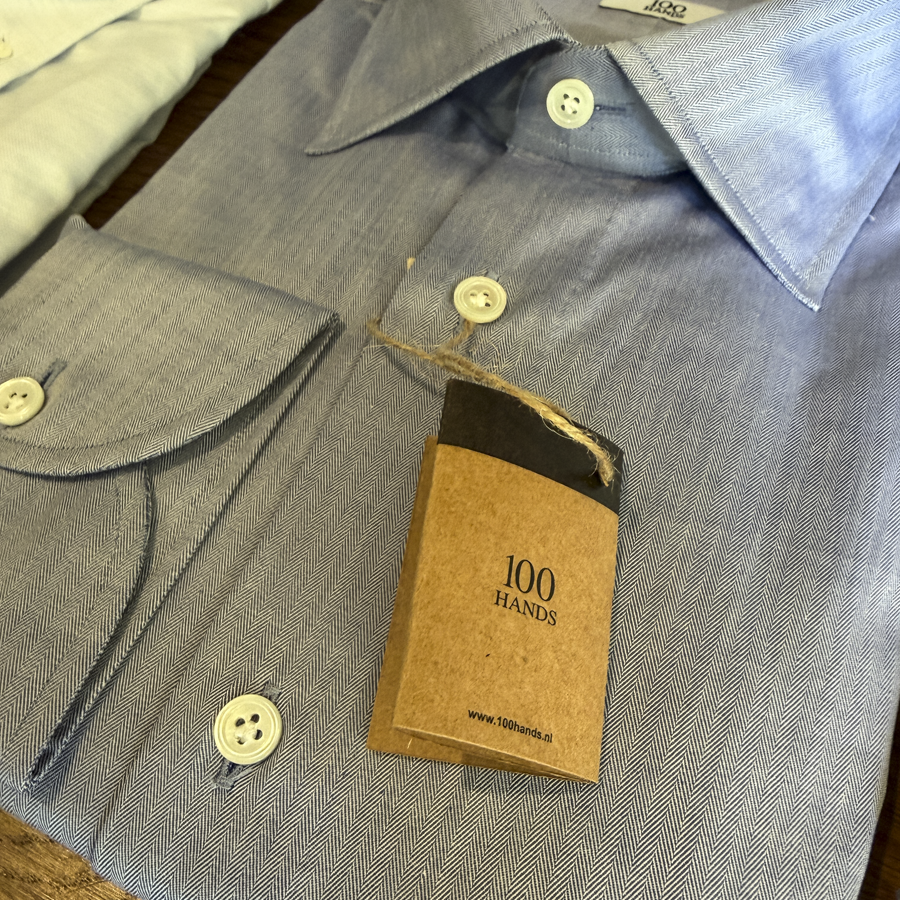
Not just the fabric—although the fabrics are exceptional—but the way the entire garment moves with you. Great shirts don’t fight your shoulders or pull across your back. They don’t balloon at the waist or feel stiff after lunch. They simply disappear. Once they’re on, you stop thinking about them, and that’s one of the highest compliments you can pay any piece of clothing.
100 Hands sources fabrics from some of the finest mills in the world. Names like Thomas Mason, Albini, Canclini, and Carlo Riva may not mean much to the average shopper, but they carry enormous weight among people who appreciate quality shirting. These aren’t fabrics selected because they’re trendy or because they photograph well on social media. They’re chosen because they’ll still look beautiful years from now.
That philosophy resonates with me because it mirrors how I think about almost everything I buy.
The sector has become obsessed with performance fabrics. Stretch this. Moisture-wicking that. Wrinkle-free everything. Somewhere along the way, dress shirts started feeling more like gym clothes than tailored garments. There’s certainly a place for technical fabrics, but there is still something deeply satisfying about beautifully woven cotton. It breathes differently. It drapes differently. It develops character over time instead of simply wearing out.
One detail that deserves special attention is the collar.
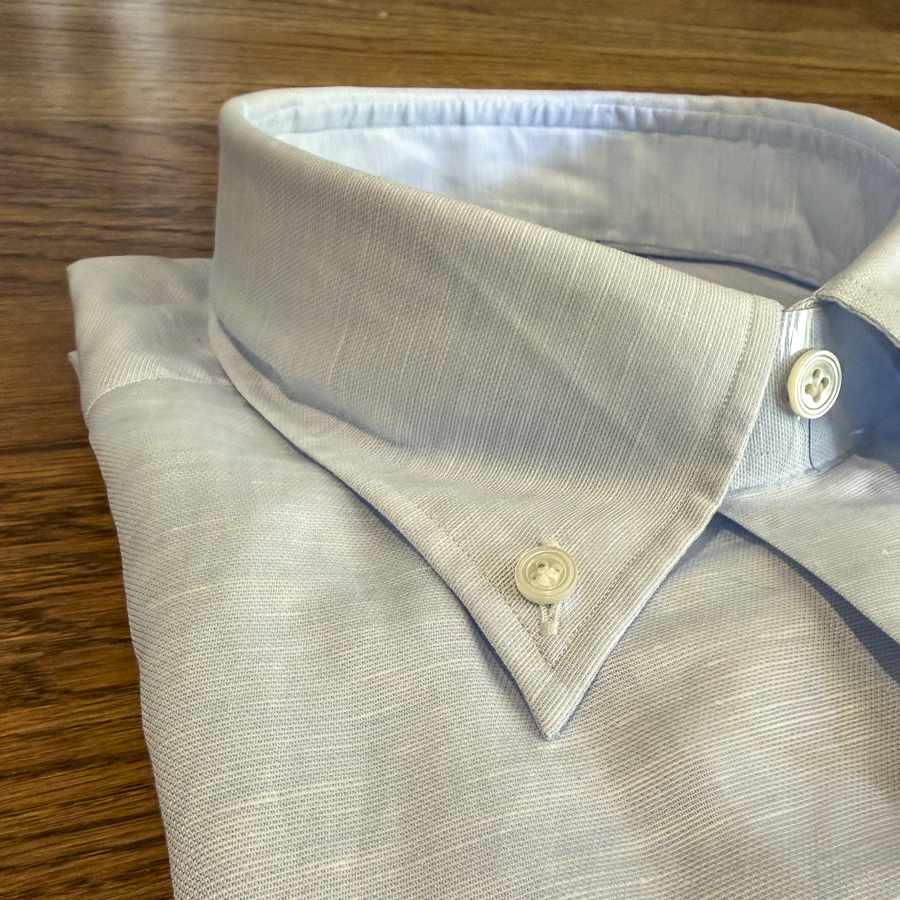
Anyone who’s owned enough dress shirts knows the collar tells the whole story. Inferior shirts collapse after a few wears. The points curl. The shape disappears. Before long, the shirt looks tired even when it’s freshly pressed.
The collars on a 100 Hands shirt strike a remarkable balance. They have enough structure to frame your face under a jacket or tie, yet enough softness to create that beautiful collar roll when worn open with chinos or jeans. They never look forced or over-engineered. They simply look natural.
The cuffs deserve the same praise. They’re substantial without being stiff and soften beautifully over time. Like a good pair of loafers or a favorite leather belt, they become more enjoyable the longer you own them.
What impresses me most, however, is the restraint.
There are no oversized logos. No unnecessary embroidery. No attempt to convince the world that you’re wearing something expensive. In fact, most people will have no idea what shirt you’re wearing. And I love that.
Luxury has become incredibly loud over the past decade. Many brands seem determined to make sure everyone within fifty feet knows exactly what you’re wearing. 100 Hands takes the opposite approach. Their shirts are built for the wearer, not the audience. The only people who recognize them are the people who understand shirts.
That kind of quiet confidence is becoming increasingly rare.
One of the biggest misconceptions about luxury shirting is that it’s reserved for suits and boardrooms. Maybe that was true thirty years ago, but it certainly isn’t today. One of the reasons I continue reaching for my 100 Hands shirts is their versatility.
A white Oxford looks just as comfortable beneath a navy sport coat as it does with broken-in denim and loafers on a Saturday afternoon. A blue herringbone works equally well in the office, at dinner, or heading into church on Sunday morning. Even their cotton/linen blend options become natural choices during the warmer months, layered beneath lighter sport coats or chore coats.
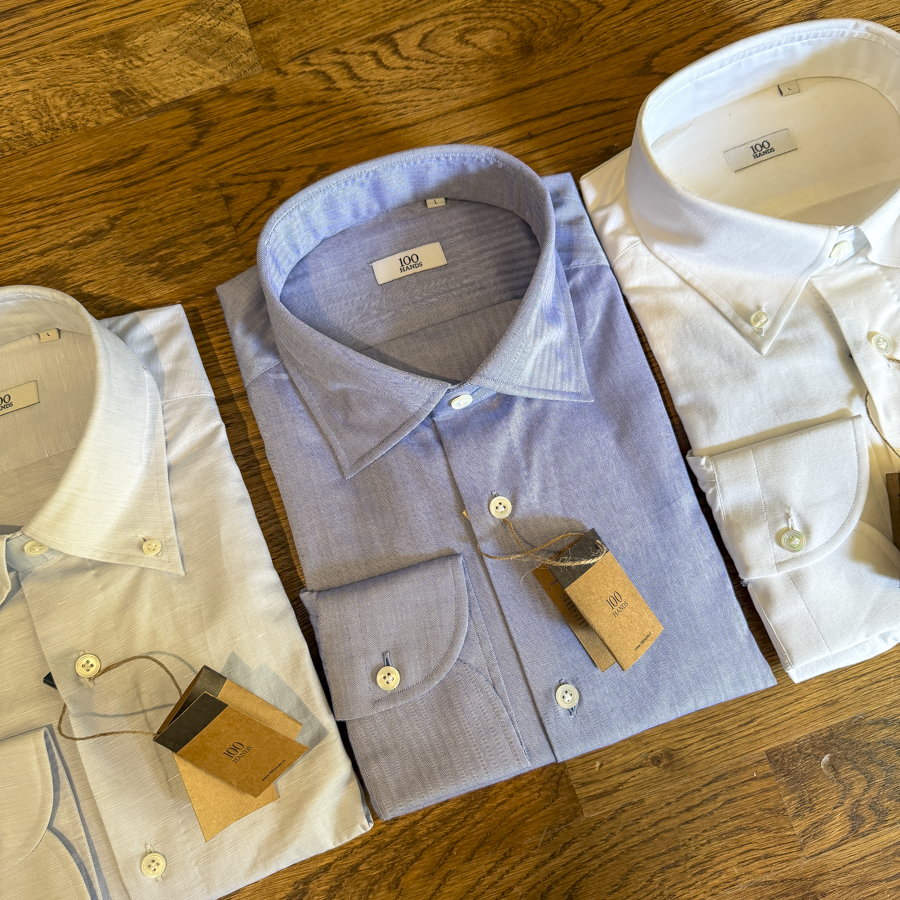
They’re shirts designed for real life.
That’s something many luxury shirtmakers still haven’t figured out. They’re designing for a customer who wears a suit every day, while most of us are moving between work, travel, dinners, golf clubs, and weekends with our families. Modern wardrobes demand flexibility, and 100 Hands delivers exactly that.
Of course, quality comes at a price. There’s no way around it. These are investment pieces. You’ll spend considerably more than you would for a department store shirt. But I’ve reached the point where I’d rather own six exceptional shirts than thirty average ones.
That isn’t about minimalism. It’s about satisfaction. When you own clothing that fits beautifully, feels exceptional, and gets better with age, getting dressed becomes easier. You stop second-guessing your choices because you’ve already surrounded yourself with pieces you genuinely enjoy wearing.
There’s also something deeply satisfying about supporting companies that continue to value craftsmanship over efficiency. The clothing industry has spent decades figuring out how to make things faster and cheaper. 100 Hands has chosen the opposite path. More handwork. Better fabrics. Smaller production. Longer timelines. They’re building shirts the old way because they believe the old way still produces the best results.
I find that refreshing.
Perhaps what I appreciate most is how these shirts age.
The fabrics soften. The collars become even more comfortable. The cuffs begin to reflect years of wear. The shirt slowly becomes yours in a way synthetic garments never really do. Like shell cordovan shoes or a waxed canvas jacket, it develops a personality. Remember, they are meant to be worn. Do so.
That’s why I believe great shirts are worth investing in. That’s why I believe every well-built wardrobe deserves at least one 100 Hands shirt. My guess is, once you own one, it won’t be your last.

