
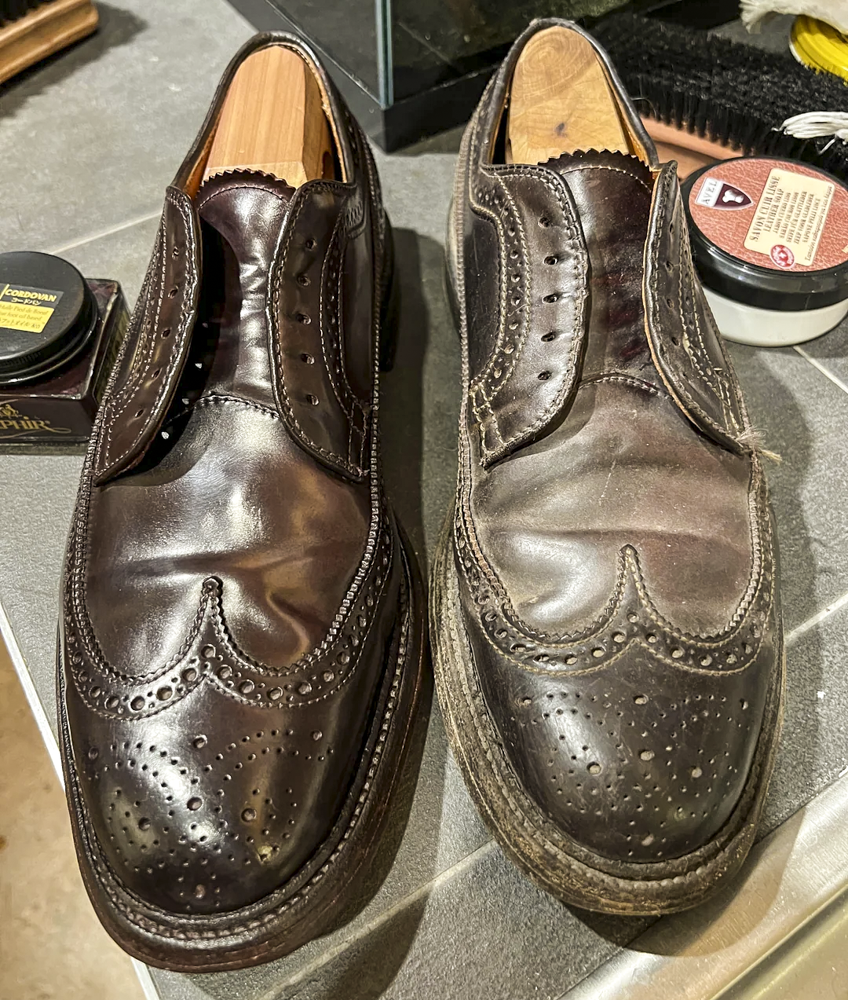
I’ve been a big believer in buying good shoes for a long time. Not necessarily expensive shoes, but good ones. There’s a difference, and I think it’s an important distinction.
Over the years, I’ve owned everything from inexpensive loafers to some pretty serious footwear from Alden, Crockett & Jones, (vintage) Gucci, Rancourt, and other makers who understand what goes into building a proper shoe. I’ve also owned plenty of shoes that looked great when they came out of the box but were essentially finished once the soles wore through.
And that’s where I’ve landed on something that I think every man should consider when buying footwear:
Can these shoes be resoled?
It’s a simple question, but one that tells you quite a bit about what you’re buying. More importantly, it can make a significant difference in what you’re spending over the long haul. I’m not suggesting that every shoe in your closet needs to be an heirloom. I have plenty of sneakers and casual shoes that will eventually find their way to the trash. But when it comes to dress shoes, loafers, boots, and the footwear I expect to wear for years, I’ve become much more intentional about buying things that can be repaired rather than replaced.
Here’s why.
The Difference Is in the Construction
Most inexpensive shoes are made using what’s called cemented construction. Essentially, the upper portion of the shoe is glued to the sole. It’s an efficient, inexpensive manufacturing process that allows companies to produce attractive footwear at accessible prices. There’s nothing inherently wrong with it, and for certain types of shoes, it makes perfect sense.
The problem comes when the sole wears out. With many cemented shoes, replacing the sole is either impractical or costs more than the shoes are worth. Once you’ve worn through the bottom, you’re essentially shopping for another pair. Some cemented shoes can be repaired by a skilled cobbler, but they’re generally not designed for repeated rebuilding.
A properly constructed, resolable shoe takes a different approach.
Understanding the Welt
Let’s talk about the Goodyear welt, because it’s probably the most recognizable feature of traditional, high-quality men’s footwear.
A welt is a narrow strip of material, usually leather, that runs around the perimeter of the shoe. In a Goodyear-welted shoe, the welt is stitched to the upper and a rib attached to the insole. The outsole is then attached to that welt with a separate line of stitching.

That separation is important. When the outsole eventually wears out, a skilled cobbler can remove it and attach a new one without having to dismantle the entire shoe. The upper, insole, and welt can often remain intact. If the welt itself is damaged, it may also be replaced, although that’s a more involved repair.
It’s a remarkably sensible design.
There are other benefits, too. Many Goodyear-welted shoes use cork filling between the insole and outsole. Over time, that cork compresses and conforms to the shape of your foot, helping create the personalized feel that makes a well-broken-in pair of shoes so comfortable.
The construction also tends to produce a substantial, supportive shoe, although the quality of the leather, insole, last, and finishing matters just as much as the welt itself.
This is one reason I have such an appreciation for Alden. Their shoes aren’t inexpensive, but they’re built using techniques that have proven themselves over generations. A great pair of Alden tassel loafers or longwings isn’t something you should have to replace every few years.
It’s something you maintain.
What About Blake Stitching?
Goodyear welting gets most of the attention, but Blake stitching deserves a mention.
With Blake construction, the outsole is stitched directly through the upper and insole, eliminating the need for a separate welt. This typically allows for a slimmer profile, a more flexible sole, and a slightly dressier silhouette. You’ll see this approach in a variety of Italian and European dress shoes, and it’s especially appropriate for footwear where elegance and flexibility are priorities.
Blake-stitched shoes can absolutely be resoled, although the process generally requires specialized equipment and a cobbler familiar with the construction. They may also have practical limits on how many times they can be resoled, depending on the materials and condition of the shoe.
What Actually Happens When You Resole a Shoe?
This is where the craftsmanship becomes especially interesting. When you take a well-made pair of shoes to a qualified cobbler, the process involves much more than gluing a new piece of rubber to the bottom. The cobbler begins by evaluating the condition of the shoes. Are the uppers healthy? Is the stitching intact? Is the welt still in good condition? Has moisture damaged the leather? Is the insole structurally sound?
Assuming everything checks out, the worn outsole is removed, along with any components that need replacement. Depending on the construction and condition, the cobbler may replace the cork filling, repair the heel stack, and install a fresh leather or rubber outsole.
The new sole is trimmed, stitched or otherwise attached using the appropriate construction method, and finished to match the shoe’s original profile. The edges are dressed, the heels are rebuilt or replaced as needed, and the shoes are cleaned and conditioned. A really good cobbler can make a tired pair of shoes look remarkably close to new.
And the best part? You don’t have to break them in again.
The uppers have already molded to your feet. The leather has softened in the right places. The shoes have developed the character that only comes from years of wear. You’re essentially getting another life out of a pair of shoes that already fit perfectly.
Here’s an incredible, extremely detailed video that breaks it all down:
The Value Goes Beyond the Math
When you buy a pair of shoes that can be repaired, you’re making a different kind of purchasing decision. You’re choosing something with the expectation that it will be part of your wardrobe for a long time.
That changes how you treat it. You use shoe trees. You brush off the dirt. You condition the leather when it needs it. You rotate your shoes rather than wearing the same pair every day. You replace heel taps or worn heel lifts before they become bigger problems. You start thinking about maintenance rather than replacement.
I’ve always appreciated that approach. It’s the same reason I like a good mechanical watch, a properly made leather belt, a waxed cotton jacket, or a quality piece of luggage. These things aren’t disposable. They’re designed to be used, maintained, and enjoyed.
And there’s something satisfying about owning a pair of shoes for fifteen years. Think about where they’ve been. Weddings. Funerals. Job interviews. Business trips. Anniversary dinners. College football weekends. Countless ordinary days at the office. The shoes become familiar. They become yours.
That’s something you simply can’t replicate with a new pair every couple of years.
What I Would Buy
If I were building a shoe collection from scratch today, I’d focus on a handful of makers that have a track record of excellent construction and repairability.
Alden would be near the top of the list. Their tassel loafers, longwings, and plain-toe bluchers are American classics. They’re substantial, beautifully proportioned, and designed to be worn for years. Alden also offers restoration services for eligible shoes, which makes the ownership proposition even more appealing.
Crockett & Jones would be another strong recommendation. Their Goodyear-welted shoes are some of the finest available, and the combination of English craftsmanship, excellent leather, and timeless designs makes them an outstanding long-term investment.
Oak Street Bootmakers deserves consideration, especially for someone who appreciates traditional American footwear. Their Chicago-made loafers, camp mocs, and other handsewn styles are right in the Red Clay Soul wheelhouse. Repair options vary by model, but their commitment to traditional construction and refurbishment is a big part of the appeal.
I’d also look seriously at Grant Stone, which offers some of the most compelling value in Goodyear-welted footwear, and Carmina, whose Spanish-made shoes combine excellent construction with beautiful, refined designs.
And don’t overlook vintage shoes. A well-maintained pair of older Aldens, Gucci, or Allen Edmonds can be a tremendous value, particularly if the uppers are in good condition and the shoes have plenty of life left in them.
One important caveat: don’t assume every shoe from a respected brand is constructed the same way. Ask about the specific model, the sole attachment method, and whether the manufacturer or a reputable cobbler can resole it. That’s the question worth asking before handing over your credit card.
A Few Things That Will Make Your Shoes Last Longer
Even the best-made shoes need a little attention.
Cedar shoe trees are one of the easiest investments you can make. They help absorb moisture, maintain the shape of the shoe, and reduce excessive creasing. Giving leather shoes a day to rest between wears also helps them dry properly.
Keep the leather clean and condition it when necessary, but don’t overdo it. Too much product can be just as problematic as too little. A good horsehair brush, appropriate leather conditioner, and occasional polish will handle most of what you need.
Pay attention to the heels and soles. Don’t wait until you’ve worn through the outsole and started damaging the welt or upper. A relatively inexpensive repair today can prevent a much more expensive repair tomorrow.
And finally, find a good cobbler. Not every shoe repair shop has the equipment or experience to properly resole a Goodyear-welted or Blake-stitched shoe. A manufacturer’s authorized restoration program or a specialist familiar with the construction is often worth the extra money. Good shoes deserve good maintenance.
Lastly
I’ve never believed that spending more automatically means you’re getting something better. There are plenty of expensive shoes that aren’t worth the money, and plenty of inexpensive shoes that serve their purpose beautifully.
But I do believe in paying for craftsmanship when that craftsmanship provides a tangible benefit. A shoe that can be resoled is a perfect example. You’re paying for better materials, more thoughtful construction, and the ability to keep something you enjoy rather than throwing it away when one component wears out.
You’re also supporting the kind of craftsmanship that deserves to survive. The people making these shoes, and the cobblers keeping them alive, are practicing skills that have become increasingly rare. And while the financial return might take years to fully appreciate, the satisfaction starts much sooner.
The next time you’re looking at a pair of $500 or $600 loafers, don’t just ask yourself whether they’re worth the money. Ask yourself whether they’re worth owning for the next twenty years.
That’s a much better way to look at it.

